Blog
Best Solar Battery for 10kW Solar System in Sydney
A 10kW solar system is an excellent option for Sydney households with moderate to high electricity consumption. However, without battery storage, much of the unused solar energy generated during the day is exported to the electricity grid.
Choosing the best solar battery for a 10kW solar system can help you store surplus energy, reduce electricity bills and improve energy independence.
With several brands, storage capacities and government incentives available, finding the right battery can be challenging. This guide explains the best battery sizes, recommended brands, installation costs and potential savings for homeowners across Sydney and NSW.
Best Solar Batteries for a 10kW Solar System in Sydney
For many Sydney households with a 10kW solar system, a battery with 10kWh to 20kWh of usable storage capacity is a practical starting point. Larger households with electric vehicles, heat pumps or high overnight electricity consumption may benefit from a 20kWh to 40kWh battery.
Sungrow, Fox ESS, Sigenergy, Alpha ESS, Neovolt and Sumray are among the solar battery brands worth considering.
However, the best choice depends on your electricity consumption, surplus solar generation, inverter compatibility, budget and backup power requirements.
1. Sungrow Solar Battery
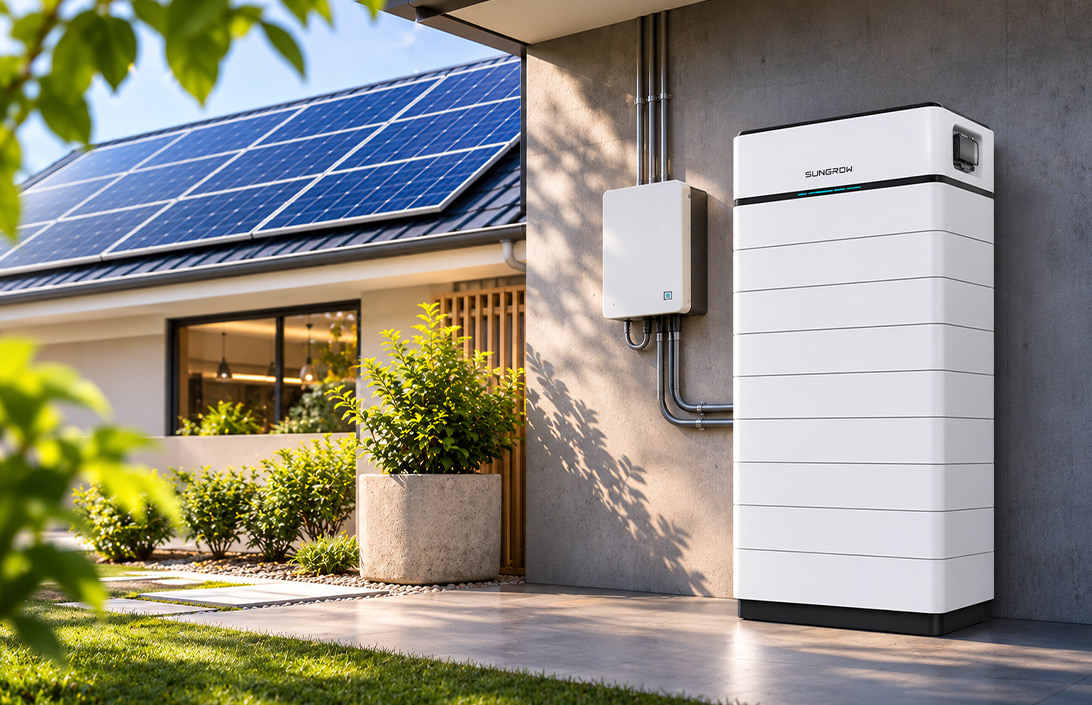
Sungrow is a strong option for homeowners looking for scalable energy storage and integration with compatible hybrid inverters.
Its SBR and SBH battery ranges allow households to select different storage capacities according to their electricity requirements.
The Sungrow SBH series is particularly suitable for larger storage configurations and households with increasing energy demands.
Best for: Households with compatible Sungrow inverters and homeowners seeking expandable battery storage.
2. Fox ESS Solar Battery
Fox ESS offers modular energy storage solutions suitable for medium to high-consumption households.
Its expandable battery configurations make it worth considering for homeowners who want to increase their storage capacity as their energy requirements grow.
Best for: Families seeking flexible storage capacity and competitive overall system value.
3. Sigenergy SigenStor Battery
Sigenergy SigenStor combines battery storage, inverter technology and intelligent energy management within an integrated system.
It also supports optional EV charging equipment, making it an attractive choice for homeowners planning to electrify their households.
Best for: Smart homes, electric vehicle owners and households seeking an integrated energy solution.
4. Alpha ESS Solar Battery
Alpha ESS offers residential energy storage systems designed to help households improve solar self-consumption and manage electricity usage.
Its product range includes different storage configurations, allowing homeowners to select a system based on their energy requirements.
Best for: Households looking for an integrated home energy storage solution.
5. Neovolt Solar Battery
Neovolt offers residential battery storage solutions that can help homeowners store excess solar energy and reduce dependence on grid electricity.
Depending on the selected system, homeowners can benefit from expandable storage and retrofit installation options.
Best for: Homeowners seeking battery storage for an existing solar system, subject to compatibility.
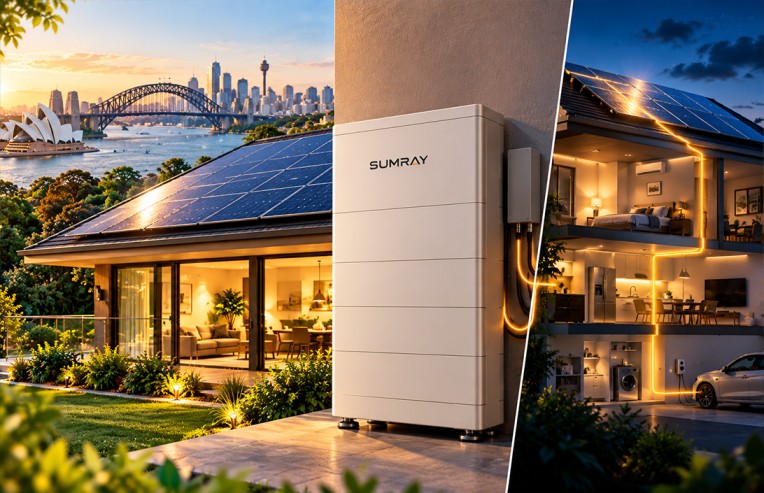
6. Sumray Solar Battery
Sumray offers lithium iron phosphate battery storage solutions suitable for households that require larger energy storage capacities.
Its modular battery configurations make it worth considering for families with substantial electricity consumption.
Best for: High-consumption households looking for scalable battery storage.
How Much Electricity Does a 10kW Solar System Generate in Sydney?
A 10kW solar panel system in Sydney can generate approximately 40kWh of electricity per day on average, based on the Australian Government’s indicative solar generation figures.
| Period | Estimated electricity generation |
|---|---|
| Daily | 40kWh |
| Weekly | 280kWh |
| Monthly | 1,200kWh |
| Annually | 14,600kWh |
Actual electricity generation varies depending on weather conditions, roof orientation, shading, panel efficiency and seasonal changes.
During summer, your solar system may generate more electricity than your household consumes. In contrast, production generally decreases during winter.
A solar battery allows you to store some of this surplus electricity and use it when your solar panels are not producing enough energy.
What Size Battery Do You Need for a 10kW Solar System?
The ideal battery size for a 10kW solar system depends on how much electricity your household consumes outside solar generation hours and how much surplus energy is available for charging.
| Usable battery capacity | Recommended for |
|---|---|
| 5–10kWh | Smaller households with low evening electricity usage |
| 10–15kWh | Average households with moderate overnight consumption |
| 15–20kWh | Families with higher evening electricity usage |
| 20–30kWh | Larger homes with air conditioning, heat pumps and other high-energy appliances |
| 30–40kWh | High-consumption households, EV owners and extended backup requirements |
These capacities are general sizing recommendations rather than fixed requirements.
For example, if your 10kW solar system generates 40kWh daily and your household consumes 20kWh during daylight hours, approximately 20kWh remains available before battery charging losses.
In this situation, a 15kWh to 20kWh battery may be suitable if your overnight electricity consumption is high enough to utilise the stored energy.
Solar Battery Comparison for a 10kW Solar System
The following table provides a starting point for comparing solar battery brands available through Battery Deals.
| Battery Brand | Key Advantage | Suitable For |
|---|---|---|
| Sungrow | Modular storage and inverter integration | Existing Sungrow solar systems |
| Fox ESS | Flexible storage configurations | Value-conscious households |
| Sigenergy | Integrated energy management and optional EV charging | Smart homes and EV owners |
| Alpha ESS | Residential energy management | Everyday household storage |
| Neovolt | Retrofit storage options | Existing solar system owners |
| Sumray | Larger modular storage configurations | High-energy consumption |
The best solar battery is not necessarily the one with the largest capacity or lowest purchase price. System compatibility, usable capacity, warranty conditions and installation quality are equally important.
Is a 10kWh or 20kWh Battery Better for a 10kW Solar System?
Both battery capacities can work effectively with a 10kW solar system. However, the better option depends on your household’s electricity consumption.
| Feature | 10kWh battery | 20kWh battery |
|---|---|---|
| Storage capacity | 10kWh | 20kWh |
| Upfront investment | Generally lower | Generally higher |
| Charging requirements | Less surplus solar energy | More surplus solar energy |
| Suitable household | Low to moderate consumption | Moderate to high consumption |
| Backup duration | Shorter | Potentially longer |
| Future electricity needs | Limited additional capacity | Greater flexibility |
A 10kWh battery may be sufficient if your household consumes less than 10kWh of electricity overnight.
However, a 20kWh battery may offer better value if you regularly consume more electricity after sunset or plan to introduce additional electrical appliances.
Battery output ratings and inverter capacity must also be considered, particularly when running multiple appliances simultaneously.
Can a 10kW Solar System Charge a 30kWh or 40kWh Battery?
Yes, a 10kW solar system can charge a 30kWh or 40kWh battery. However, it may not fully recharge a depleted battery every day.
For example, consider the following household energy consumption scenario.
| Energy factor | Daily electricity |
|---|---|
| Solar electricity generated | 40 kWh |
| Daytime household consumption | 15 kWh |
| Surplus electricity available | 25 kWh |
| Potential stored energy at 95% charging efficiency | 23.75 kWh |
In this example, neither a completely depleted 30kWh nor a 40kWh battery would fully recharge using that day’s surplus solar energy alone.
Larger batteries may still be suitable for households with high electricity consumption, extended backup requirements or compatible grid-charging arrangements.
The key is to balance battery capacity with actual solar generation and energy usage rather than selecting the largest available battery.
How Much Does a 10kW Solar System with Battery Cost in Sydney?
The total installation cost of a 10kW solar system with battery storage varies according to the battery brand, usable capacity, inverter requirements and installation complexity.
Homeowners adding a battery to an existing 10kW solar system may pay less than those installing an entirely new solar and battery package, particularly if their existing inverter is compatible.
The main factors affecting the total cost include:
Solar battery brand and storage capacity
Existing inverter compatibility
Single-phase or three-phase electricity supply
Switchboard upgrades and electrical work
Backup power configuration
Available government rebates
Before purchasing a solar battery, request a detailed installation quote that includes equipment, labour, electrical upgrades and applicable government incentives.
Battery Deals can help you determine the cost of a suitable solar battery system based on your property’s energy requirements.
Government Solar Battery Rebates in Sydney and NSW
Eligible Sydney homeowners can reduce the upfront cost of installing solar battery storage through the Australian Government’s Cheaper Home Batteries Program.
From 1 May 2026, the federal battery incentive follows a tiered structure based on usable storage capacity.
| Usable battery capacity portion | Applicable STC factor percentage |
|---|---|
| First 14kWh | 100% |
| Above 14kWh to 28kWh | 60% |
| Above 28kWh to 50kWh | 15% |
The STC factor for May to December 2026 is 6.8. It is scheduled to decrease to 5.7 from 1 January 2027.
Therefore, eligible homeowners who complete their battery installation before January 2027 may receive a higher federal incentive than those installing an equivalent system afterwards.
NSW homeowners may also explore additional incentives associated with eligible Virtual Power Plant (VPP) arrangements.
How Much Can You Save with a 10kW Solar System and Battery?
Installing battery storage can help Sydney homeowners reduce electricity bills by using stored solar energy instead of purchasing electricity from the grid.
Consider a household with the following electricity usage and tariff assumptions.
| Energy factor | Example |
|---|---|
| Solar system capacity | 10kW |
| Daily solar generation | 40kWh |
| Daily energy supplied by battery | 15kWh |
| Grid electricity rate | $0.35/kWh |
| Solar feed-in tariff | $0.05/kWh |
| Assumed battery round-trip efficiency | 90% |
| Estimated daily net savings | $4.42 |
| Estimated monthly savings | $132.50 |
| Estimated annual savings | $1,612 |
This example accounts for the solar feed-in tariff income forgone when charging the battery and assumed energy conversion losses.
Actual savings depend on electricity tariffs, battery usage, seasonal solar generation and household consumption. These figures assume the stated daily battery usage is achieved throughout the year and exclude installation costs, degradation and maintenance.
Factors to Consider When Choosing the Best Solar Battery
Household electricity consumption
Review your electricity bills and smart meter data to understand how much energy your household consumes during the evening and overnight.
Choosing a battery based on actual consumption can help you avoid unnecessary expenditure.
Usable battery capacity
A battery’s nominal capacity and usable capacity may differ. Compare usable storage capacity to understand how much electricity the system can actually store and deliver.
Battery chemistry and safety
Lithium iron phosphate (LiFePO4 or LFP) batteries are commonly used in residential energy storage due to their thermal stability and suitability for frequent charging and discharging.
Always select appropriately approved products and ensure professional installation.
Inverter compatibility
Not every solar battery is compatible with every inverter. Your existing solar system may require a compatible hybrid inverter, an AC-coupled battery solution or an equipment upgrade.
Battery warranty and lifespan
Compare product warranty periods, retained capacity guarantees, energy throughput limits and applicable warranty conditions before making a purchase.
Backup power requirements
If you want electricity during blackouts, ensure your battery and inverter support backup operation.
Some systems supply selected essential appliances, while others can support larger household loads depending on their configuration and output limits.
Can You Add a Solar Battery to an Existing 10kW Solar System?
Yes, most existing 10kW solar systems can be upgraded with battery storage using an appropriately designed solution.
Depending on your existing equipment, you may be able to connect a compatible battery directly to a hybrid inverter or install an AC-coupled battery system.
An experienced solar battery installer can assess your current equipment, electrical supply, available installation space and energy consumption before recommending the most suitable option.
Is a Solar Battery Worth It for a 10kW Solar System in Sydney?
Yes, a solar battery can be a worthwhile investment if your 10kW solar system regularly exports surplus electricity and you purchase significant amounts of grid electricity after sunset.
Battery storage can help homeowners increase solar self-consumption, reduce exposure to rising electricity prices and improve energy independence.
However, households with very low evening consumption may achieve better financial returns with a smaller battery or by shifting electricity usage to daylight hours.
The right battery should complement your household’s energy consumption rather than simply match the solar panel system’s rated capacity.
Where to Buy the Best Solar Battery for a 10kW Solar System in Sydney?
If you are looking for the best solar battery for your 10kW solar system, Battery Deals can help you choose an energy storage solution tailored to your home.
As a NETCC Approved Seller, Battery Deals offers solar battery solutions across Sydney and NSW, including products from Sungrow, Fox ESS, Sigenergy, Alpha ESS, Neovolt and Sumray.
Whether you need a smaller battery for everyday electricity savings or a larger storage system for your growing energy requirements, our team can assist with battery selection, installation and available government incentives.
Contact Battery Deals Today for a Personalised Solar Battery Quote.
Conclusion
Choosing the best solar battery for a 10kW solar system in Sydney requires careful consideration of your electricity consumption, solar generation, budget and future energy requirements.
While a 10kWh to 20kWh battery may suit many households, larger storage systems can offer additional benefits for high-consumption homes and electric vehicle owners.
With the right battery and professional installation, Sydney homeowners can make better use of their solar energy and reduce dependence on grid electricity.
Unlock the full potential of your 10kW solar system with Battery Deals. Contact our team today for solar battery sales and installation across Sydney and NSW.
Frequently Asked Questions
How many batteries do I need for a 10kW solar system?
The number of batteries depends on the capacity of each battery module and your total storage requirements. For many households, 10kWh to 20kWh of usable storage is a reasonable starting point.
Is a 10kWh battery enough for a 10kW solar system?
Yes, a 10kWh battery may be sufficient for households with relatively low evening and overnight electricity consumption. Larger families may benefit from additional storage capacity.
How long will a 20kWh solar battery last?
A fully charged battery with 20kWh of usable energy could theoretically supply a constant 2kW load for approximately 10 hours, excluding conversion losses and backup reserves.
Can a 10kW solar system charge an electric vehicle and a battery?
Yes. However, the ability to charge both depends on available solar generation, household electricity consumption, EV charging power and battery charging limits.
Can I install a 40kWh battery with a 10kW solar system?
Yes, provided the equipment is compatible and the installation meets applicable requirements. However, your solar system may not generate enough surplus electricity to fully charge a depleted 40kWh battery every day.
Which solar battery brand is best for a 10kW solar system?
Sungrow, Fox ESS, Sigenergy, Alpha ESS, Neovolt and Sumray are worth considering. The best brand depends on your existing inverter, required capacity, budget and energy management preferences.
Can I run my entire house on a solar battery?
Yes, if the battery capacity, inverter output and backup configuration are sufficient to support your household’s electrical loads. Not every battery installation provides whole-home backup.
Latest from Our Blog